
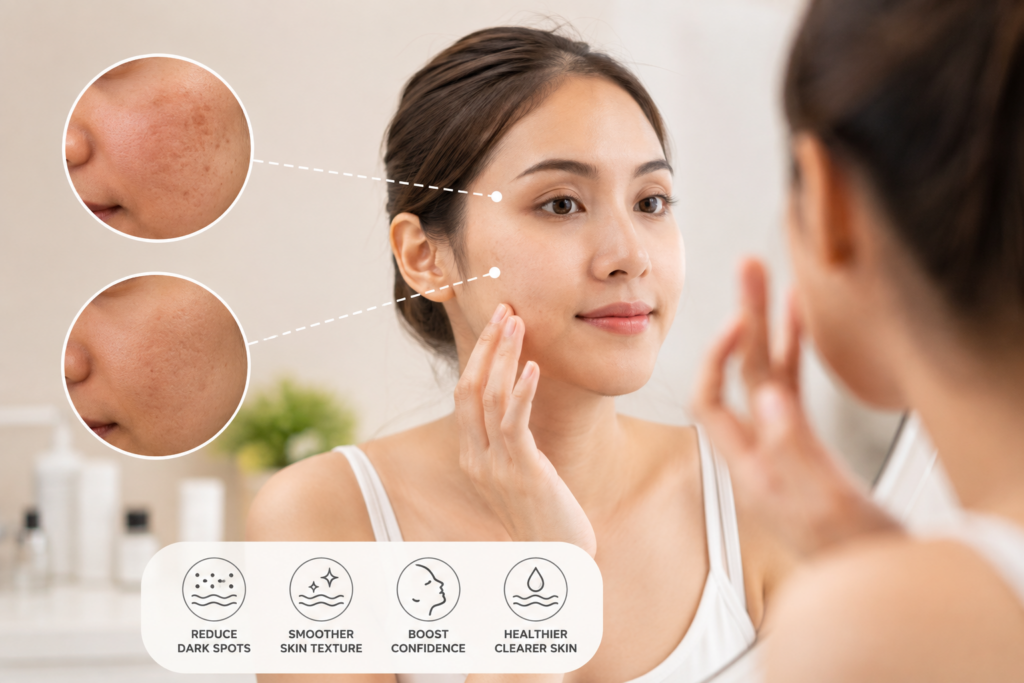
Clearing acne is an important achievement, but for many people, the skin journey does not end there.
After acne heals, some individuals are left with reminders such as dark spots, uneven skin tone, or changes in skin texture. These concerns are commonly known as post-acne marks and acne scars.
At SoHeal Clinic, we understand that acne scars can affect confidence and make people feel uncomfortable about their skin. With the right approach, acne scars can be improved through suitable treatments and proper skin management.
What Are Acne Scars?
Acne scars develop when inflammation from acne damages the skin during the healing process.
Severe or untreated acne has a higher chance of leaving permanent changes to the skin.
There are different types of acne marks and scars:
Types of Acne Scars
1. Post-Inflammatory Hyperpigmentation (Dark Spots)
These are flat marks that appear after acne heals.
They may appear as:
- Brown spots
- Red marks
- Dark patches
Although they are not true scars, they can take time to fade without proper care.
2. Atrophic Acne Scars
These occur when the skin loses collagen during healing.
Common types include:
Ice Pick Scars
Small but deep scars that appear like tiny holes in the skin.
Boxcar Scars
Broad depressions with defined edges.
Rolling Scars
Uneven skin texture caused by damage beneath the skin surface.
3. Raised Acne Scars
Some individuals develop raised scars due to excessive collagen production during healing.
These scars appear elevated compared to surrounding skin.
What Causes Acne Scarring?
Several factors increase the risk of acne scars:
1. Picking or Squeezing Pimples
One of the biggest mistakes is manually popping acne.
This can push inflammation deeper into the skin and increase scarring risk.
2. Severe Inflammatory Acne
Large, painful, and deep acne lesions are more likely to leave permanent marks.
3. Delaying Acne Treatment
Leaving acne untreated for a long period may increase inflammation and skin damage.
4. Genetics
Some individuals naturally have a higher tendency to develop scars after skin injury.
How Can Acne Scars Be Improved?
The best treatment depends on the type and severity of the scars.
At SoHeal Clinic, treatment plans are personalised according to your skin condition.
Possible approaches may include:
1. Skin Rejuvenation Treatments
Professional treatments can help improve:
✔ Skin texture
✔ Uneven appearance
✔ Overall skin quality
2. Chemical Peel Treatments
Chemical peels help remove damaged surface skin cells and support smoother-looking skin.
They may help improve:
- Dull skin
- Uneven tone
- Mild acne marks
3. Advanced Skin Treatments
For deeper acne scars, targeted procedures may be recommended depending on individual needs.
A professional assessment helps determine the most suitable option.
Can Acne Scars Be Prevented?
Yes, prevention is always better than correction.
You can reduce the risk of acne scars by:
✔ Treating acne early
✔ Avoiding picking pimples
✔ Using suitable skincare products
✔ Applying sunscreen daily
✔ Seeking professional advice when acne persists
When Should You Seek Professional Acne Scar Treatment?
Consider professional consultation if:
- Acne scars affect your confidence
- Skin texture appears uneven
- Dark marks do not improve over time
- Previous acne treatments have not worked
A personalised treatment plan can help you understand what options are suitable for your skin.
Final Thoughts
Acne scars are a common concern, but they do not have to define your skin journey.
With proper acne management, suitable treatments, and consistent skincare, your skin can look healthier and more balanced.
At SoHeal Clinic, we focus on helping patients improve their skin through personalised solutions designed around individual needs.
📍 Location: 11-G Jalan Eco Santuari 8/1C, Selangor
📞 Phone: +03 8683 2781
🌎 Website: www.sohealskin.com