
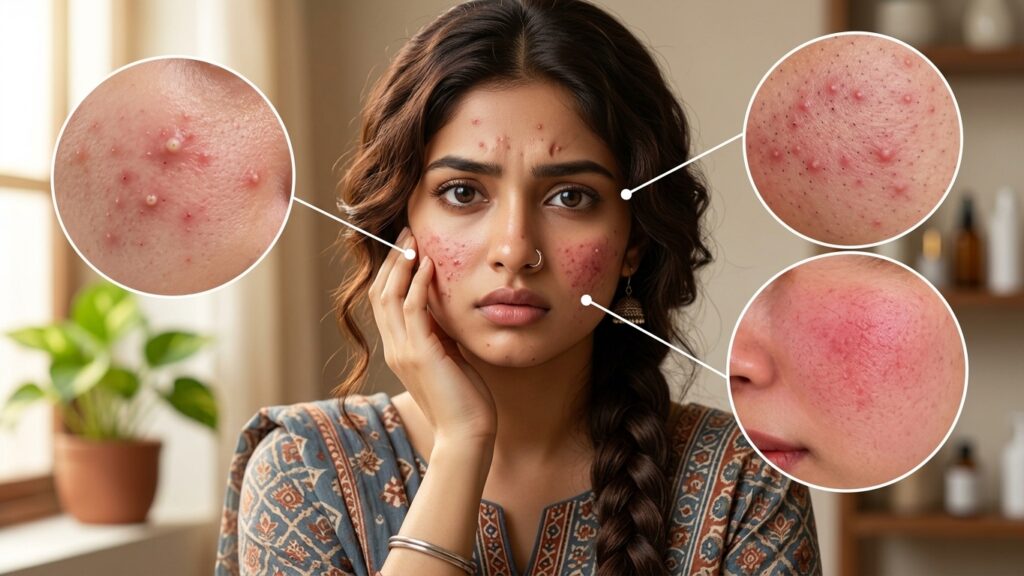
Not every red bump on the face is acne.
If you regularly experience small bumps, redness, whiteheads, or inflamed spots, it can be tempting to assume that you simply have acne and start using an acne treatment. However, several different skin conditions can look similar to acne while requiring different approaches.
For people searching for acne treatment in Kuala Lumpur, understanding the difference between acne and other acne-like conditions can help prevent unnecessary trial and error.
Three conditions that are sometimes confused are acne, folliculitis, and rosacea.
Although they can share some similarities, their patterns, triggers, and management approaches can be different.
What Does Acne Usually Look Like?
Acne is a common skin condition that develops when hair follicles become clogged and inflamed.
It can appear as:
- Blackheads
- Whiteheads
- Small red bumps
- Pus-filled pimples
- Deeper, painful lumps
- A combination of different types of lesions
Acne commonly affects the face, but it can also appear on areas such as the chest, shoulders, and back.
One of the clues that may point toward acne is the presence of comedones, meaning blackheads and whiteheads.
Acne can also fluctuate over time. Some people experience occasional breakouts, while others develop persistent or recurring acne that can eventually leave dark marks or scars.
What Is Folliculitis?
Folliculitis refers to inflammation around hair follicles.
It can sometimes look very similar to acne because it may produce small red bumps or pustules.
Folliculitis can be associated with factors such as:
- Friction
- Sweating
- Shaving or hair removal
- Occlusive clothing
- Certain microorganisms
- Irritation around hair follicles
It can occur on different areas of the body and is not limited to the face.
For example, someone who exercises frequently may notice small bumps developing in areas where sweat, friction, and occlusion occur.
Because folliculitis and acne can look similar, repeatedly treating folliculitis as ordinary acne may not provide the expected improvement.
What Is Rosacea?
Rosacea is another condition that can sometimes be mistaken for acne, particularly when it causes red bumps and pustules.
However, rosacea often has a prominent redness component.
People with rosacea may experience:
- Persistent facial redness
- Flushing
- Visible small blood vessels
- Burning or stinging sensations
- Red bumps or pustules
- Increased sensitivity to skincare products
Rosacea commonly affects the central areas of the face, although its presentation can vary.
Unlike typical acne, blackheads are generally not a defining feature of rosacea.
Acne vs Folliculitis vs Rosacea
While only a proper assessment can determine what condition you have, some general differences can be useful.
| Feature | Acne | Folliculitis | Rosacea |
|---|---|---|---|
| Blackheads/whiteheads | Common | Usually absent | Usually absent |
| Red bumps | Common | Common | Common |
| Pustules | Possible | Possible | Possible |
| Facial flushing | Not typical | Not typical | Common |
| Persistent redness | Not usually the main feature | Not usually the main feature | Common |
| Hair follicles involved | Yes | Yes | Can involve facial follicles |
| Triggered by friction/sweating | Sometimes | Often relevant | Can aggravate symptoms |
| Sensitive or burning skin | Variable | Variable | Common in some people |
This table is only a general guide. Skin conditions can overlap, and individual presentations are not always textbook examples.
Why Misidentifying Your Skin Condition Can Be a Problem
One of the biggest challenges with acne-like skin problems is that the wrong treatment may not address the actual condition.
For example, someone may respond to persistent bumps by:
- Using multiple acne products
- Scrubbing the skin
- Applying strong exfoliants
- Washing the face excessively
- Trying several new products at once
- Frequently changing their skincare routine
If the underlying problem is not typical acne, these approaches may not produce the improvement expected.
In some cases, excessive experimentation may also irritate the skin barrier and make redness or sensitivity more noticeable.
Your Skin’s Location Can Provide Useful Clues
Where your breakouts appear can sometimes provide additional information.
Face
Facial bumps can be caused by acne, rosacea, folliculitis, irritation, and several other conditions.
The location, appearance, and accompanying symptoms matter.
Hairline and Forehead
Small bumps around the hairline can sometimes be associated with skincare or haircare products, sweat, occlusion, or follicular problems.
Chest and Back
Acne and folliculitis can both affect these areas.
Sweat, friction, exercise, and tight clothing can sometimes contribute to follicular irritation.
Areas Affected by Shaving
Small bumps following shaving or hair removal may sometimes be related to follicular irritation or ingrown hairs rather than conventional acne.
Malaysia’s Hot and Humid Climate Can Add Challenges
For people living in Kuala Lumpur, Selangor, and other parts of Malaysia, heat and humidity can make skin management more challenging.
Sweating and prolonged moisture can contribute to discomfort and may worsen certain follicular conditions in susceptible individuals.
Friction from clothing, helmets, masks, sports equipment, or other items can also irritate the skin.
However, heat and humidity do not automatically mean that every breakout is caused by sweat.
Your skin condition still needs to be considered as a whole.
When Should You Get Your Skin Assessed?
Consider professional assessment if:
- Your “acne” does not improve with appropriate acne care
- Your skin is persistently red
- You experience frequent flushing
- Your bumps are very uniform in appearance
- Your skin burns or stings
- Breakouts frequently occur after sweating or friction
- Your condition suddenly changes
- You develop painful or persistent lesions
- You are developing dark marks or scars
Getting the right assessment can help you avoid spending months trying products that may not be appropriate for your skin.
Don’t Diagnose Your Skin Based Only on Photos Online
Online skincare content can be useful for education, but photographs and descriptions cannot always distinguish between conditions that look similar.
Two people may both have “small red bumps” but have completely different underlying skin concerns.
This is why professional evaluation can be valuable when a skin problem is persistent or unclear.
How SoHeal Clinic Can Help
At SoHeal Clinic, we understand that effective skin management starts with understanding what is actually happening with your skin.
If you are experiencing persistent breakouts, redness, bumps, or recurring skin concerns, a professional consultation can help you better understand your condition and discuss appropriate management options.
For those looking for acne treatment in KL, acne solutions in Kuala Lumpur, or professional skin care advice in Selangor, getting the correct assessment is an important first step.
Rather than continuously adding new products to your routine, it may be more helpful to understand the reason behind your skin changes.
Final Thoughts
Not every bump is acne.
Acne, folliculitis, rosacea, irritation, and other skin conditions can sometimes look similar, but their management can be different.
If your skin has not responded to your usual acne routine, or if redness, burning, flushing, or unusual patterns are present, consider getting your skin professionally assessed.
The right approach starts with understanding your skin—not simply treating every bump as acne.
📍 Location: 11-G Jalan Eco Santuari 8/1C, Selangor
📞 Phone: +03 8683 2781
🌎 Website: www.sohealskin.com