
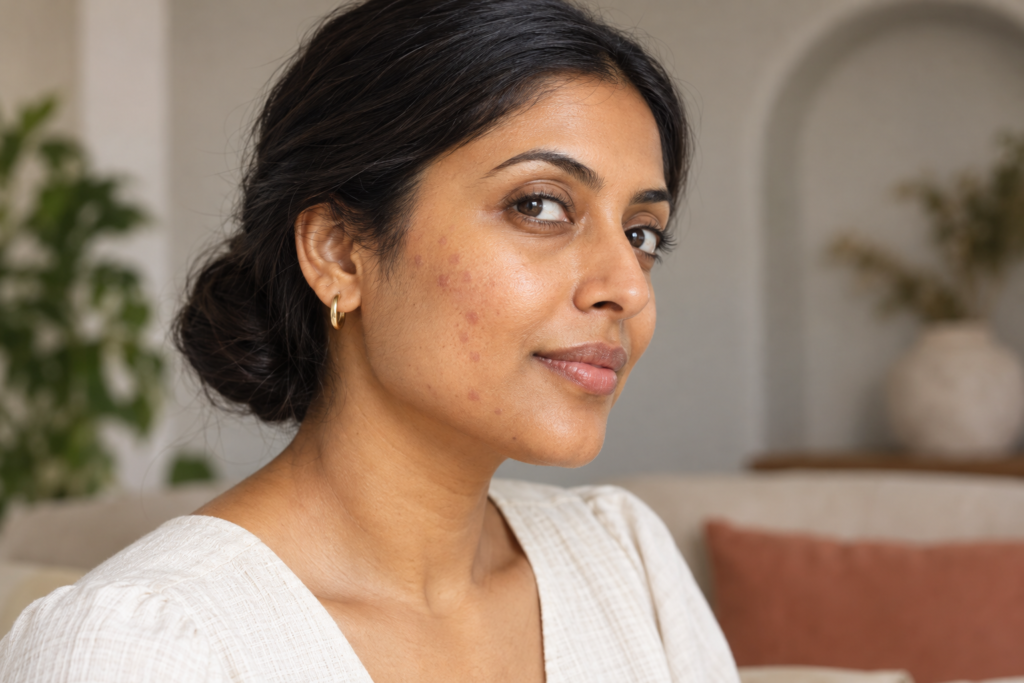
Have you ever noticed that even after a pimple has healed, a red, pink, or purple mark remains on your skin?
You are not alone. Many people experience marks after acne, and sometimes these marks remain visible long after the original pimple has disappeared.
The good news is that these marks are not always permanent scars. In many cases, they are changes in skin colour that gradually fade over time.
Let’s understand why post-acne marks happen and how you can care for your skin.
1. Why Does Acne Leave Red or Purple Marks?
When a pimple develops, the surrounding skin can become inflamed. As the inflammation settles, changes in the skin may remain.
Two common types of post-acne marks are post-inflammatory erythema and post-inflammatory hyperpigmentation.
Post-Inflammatory Erythema (PIE)
PIE usually appears as red, pink, or sometimes purple marks after an acne breakout.
These marks are associated with changes in small blood vessels following inflammation. They may be more noticeable in lighter skin tones but can also appear differently depending on your natural skin colour.
Post-Inflammatory Hyperpigmentation (PIH)
PIH appears as brown, dark brown, or greyish marks.
It happens when inflammation triggers increased melanin production in the affected area. These marks are often more noticeable in medium to deeper skin tones.
Although PIE and PIH may look similar, they have different underlying causes and may require different approaches to care.
2. Are Post-Acne Marks the Same as Acne Scars?
Not exactly.
This is an important difference to understand.
Post-acne marks affect the colour of the skin. They may appear red, purple, or brown, but the skin surface generally remains smooth.
Acne scars involve changes in the skin’s texture or structure. They may appear as:
- Depressed or indented areas.
- Deep pits or small holes.
- Raised or thickened areas.
Some acne scars may require professional treatments, while post-acne marks often improve gradually with time and suitable skincare.
3. What Makes Post-Acne Marks More Noticeable?
Several factors may influence how long post-acne marks remain visible.
Picking or squeezing pimples
Touching, picking, or squeezing acne can increase inflammation and potentially worsen the appearance of marks.
Severe or persistent acne
Deeper and more inflamed breakouts may leave more noticeable marks after healing.
Sun exposure
UV exposure can make pigmentation-related marks darker and more difficult to manage.
Skin irritation
Using harsh skincare products or exfoliating too frequently may cause additional irritation and contribute to post-inflammatory pigmentation.
4. How Can You Care for Skin With Post-Acne Marks?
A consistent skincare routine can help support skin recovery and improve the appearance of some post-acne marks.
Wear sunscreen every day
Sun protection is important, particularly when you have marks left behind by acne. Choose a broad-spectrum sunscreen with SPF 30 or higher and reapply as directed.
Use gentle skincare products
Avoid harsh cleansers and excessive exfoliation. A gentle routine helps maintain your skin barrier and reduces unnecessary irritation.
Consider suitable skincare ingredients
Depending on your skin type and concerns, ingredients such as niacinamide, azelaic acid, and retinoids may help improve the appearance of certain post-acne marks.
Introduce active ingredients gradually and seek professional advice if you have sensitive skin.
Keep your skin moisturised
A suitable moisturiser helps maintain hydration and supports the skin barrier.
Avoid picking your pimples
Allow active breakouts to heal naturally where possible. Picking can increase inflammation and the risk of scarring.
5. How Long Do Post-Acne Marks Take to Fade?
There is no fixed timeline because it depends on the type of mark, the severity of inflammation, your skin tone, and your skincare habits.
Some red or pink marks may gradually improve over several weeks or months. Pigmentation-related marks can take several months or longer to fade.
Deeper acne scars generally do not disappear with skincare products alone and may require professional assessment.
Patience and consistency are important. Avoid expecting overnight results or using too many strong products in an attempt to speed up the process.
6. When Should You Consider Professional Skin Treatment?
If your post-acne marks remain noticeable, your acne keeps returning, or you are concerned about uneven skin tone and texture, a professional skin assessment may help.
Different types of marks require different approaches. Treatments that may be suitable for one concern may not be appropriate for another.
At SoHeal Clinic, your skin concerns can be assessed so that suitable skincare and treatment options can be discussed based on your skin condition.
Healthy Skin Takes Time
Red, purple, and brown marks after acne are common. They are often signs of changes that happen during the skin’s healing process rather than permanent damage.
The best approach is to manage active acne, protect your skin from the sun, avoid unnecessary irritation, and follow a consistent skincare routine.
Remember, clearer-looking skin is a journey. Give your skin time and choose care that suits its needs.
If you are struggling with persistent acne marks, uneven skin tone, or acne scars, SoHeal Clinic is here to help you explore suitable options for your skin.
Book a consultation with SoHeal Clinic today.
SoHeal Clinic
📍 11-G Jalan Eco Santuari 8/1C, Selangor
📞 +03 8683 2781
🌐 www.sohealskin.com