
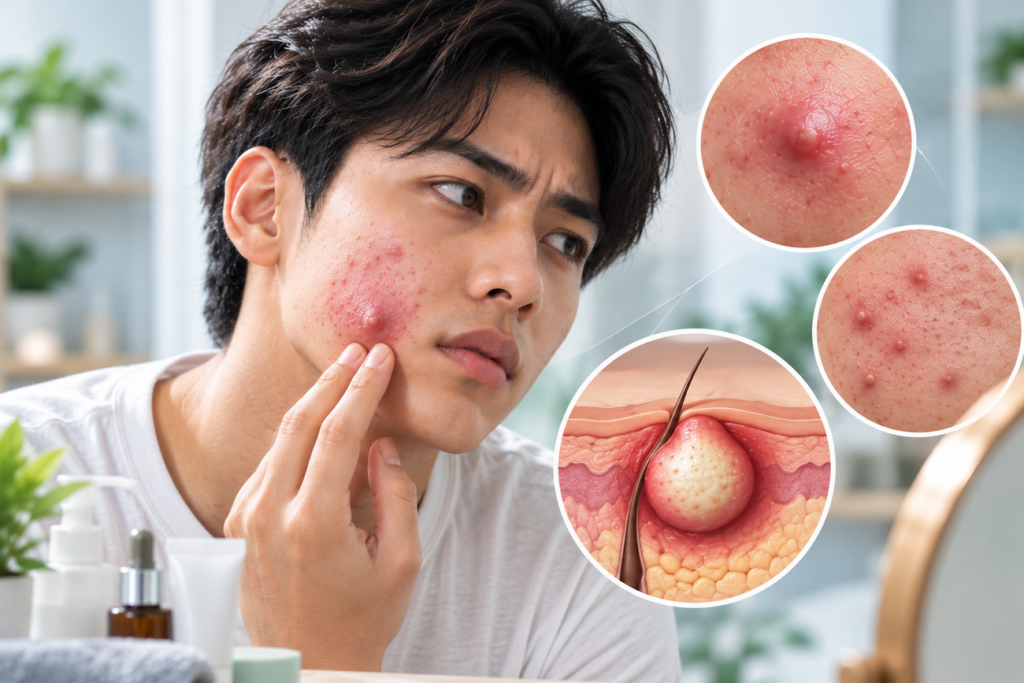
Have you ever experienced a large, painful bump underneath your skin that seems to take much longer to disappear than a normal pimple?
It could be a form of severe inflammatory acne, including nodular or cystic acne.
Unlike blackheads or small surface pimples, these breakouts develop deeper within the skin. They can feel tender or painful and may have a greater risk of leaving persistent marks or scars.
At SoHeal Clinic, we believe that understanding severe acne early is important. Instead of repeatedly squeezing, covering, or waiting for painful acne to disappear, getting your skin properly assessed can help you understand what may be contributing to the problem and what treatment options may be appropriate.
What Is Cystic Acne?
Cystic acne is commonly used to describe severe, deep inflammatory acne.
Rather than forming only near the surface of the skin, these acne lesions develop deeper within the skin and may appear as large, swollen, tender bumps.
They can occur on areas such as:
- Face
- Jawline
- Chin
- Back
- Chest
- Shoulders
Because the inflammation is deeper, these breakouts may take longer to settle than ordinary pimples.
What Does Cystic Acne Look and Feel Like?
Deep inflammatory acne can be different from regular acne.
You may notice:
✔ Large bumps underneath the skin
✔ Redness and swelling
✔ Pain or tenderness when touched
✔ Breakouts that remain for an extended period
✔ Several inflamed lesions appearing together
✔ Marks remaining after the acne heals
If your acne is deep and painful, treating it like a normal surface pimple may not be enough.
What Causes Cystic Acne?
There is rarely one single cause.
Several factors can contribute to the development of severe acne.
1. Excess Oil Production
Sebum is naturally produced by the skin to maintain moisture.
However, when too much sebum is produced, it can combine with dead skin cells and contribute to blocked hair follicles.
This can create conditions that encourage acne formation.
2. Hormonal Changes
Hormones can significantly influence oil production.
This is why severe breakouts may appear or worsen during:
- Puberty
- Menstrual cycles
- Periods of hormonal fluctuation
- Certain stages of adulthood
Some people may also notice that deep acne repeatedly appears around the jawline and chin.
3. Inflammation
Inflammation plays an important role in severe acne.
When inflammation develops deeper within the skin, the resulting lesions may become larger, more swollen, and more painful.
4. Genetics
Your family history can also influence your likelihood of developing severe acne.
If close family members have experienced significant acne, you may have an increased tendency to develop similar concerns.
5. Stress and Lifestyle Factors
Stress does not necessarily cause every case of acne, but it may contribute to flare-ups in some people.
You may notice your skin becoming worse during periods of:
- Work pressure
- Poor sleep
- Emotional stress
- Major lifestyle changes
Understanding your personal triggers can be useful when developing a long-term acne management strategy.
Why You Should Avoid Squeezing Deep Acne
When a large, painful pimple appears, squeezing it may feel like the fastest solution.
However, deep acne should not be aggressively squeezed.
Doing so may increase:
❌ Inflammation
❌ Skin damage
❌ Post-acne pigmentation
❌ Risk of scarring
Because the inflammation occurs deeper within the skin, attempting to extract it yourself may cause additional trauma.
Can Cystic Acne Cause Scars?
Deep inflammatory acne has a higher risk of scarring than mild acne because inflammation can affect deeper layers of the skin.
After the acne settles, some people may experience:
- Dark marks
- Red marks
- Depressed scars
- Uneven skin texture
- Raised scars in some cases
This is why managing severe acne early is important — not only to control active breakouts but also to reduce the risk of lasting skin changes.
How Is Severe Acne Treated?
There is no single treatment suitable for every patient.
The appropriate approach depends on factors such as:
- Acne severity
- Type of lesions
- Skin type
- Previous treatments
- Possible underlying triggers
- Presence of acne scars or pigmentation
For significant nodular or cystic acne, professional medical assessment is particularly important. Depending on the diagnosis and severity, medical treatment may be necessary rather than relying on cosmetic procedures or over-the-counter skincare alone.
What About Your Daily Skincare Routine?
Even when receiving professional acne treatment, daily skincare remains important.
A simple routine may include:
Gentle Cleansing
Avoid aggressively scrubbing painful acne.
Appropriate Moisturisation
Maintaining the skin barrier is important, particularly when acne treatments cause dryness.
Sun Protection
Daily sunscreen can help protect the skin and prevent post-acne marks from becoming more noticeable.
Suitable Acne Products
Avoid introducing multiple strong active ingredients without understanding whether they are appropriate for your skin.
When Should You Seek Professional Help?
Consider getting professional advice if:
- Your acne is deep and painful
- Large breakouts repeatedly appear
- Acne is leaving scars
- Your condition is getting worse
- Over-the-counter treatments have not helped
- Acne is affecting your confidence or daily life
For severe acne, seeking medical advice earlier can be particularly important because timely treatment may help reduce the risk of permanent scarring.
How SoHeal Clinic Can Help
At SoHeal Clinic, our approach begins with understanding your skin and the severity of your acne.
Rather than treating every breakout the same way, we consider your individual acne concerns and skin condition before discussing suitable management options.
Our focus is on:
✔ Understanding your acne condition
✔ Identifying possible contributing factors
✔ Recommending appropriate treatment options
✔ Supporting healthier skin
✔ Helping manage the risk of acne marks and scars
For patients with severe or persistent acne, an appropriate assessment can also determine whether further medical management is required.
Final Thoughts
Deep, painful acne should not simply be treated as another pimple.
Because nodular and cystic acne can involve significant inflammation and carry a greater risk of scarring, early and appropriate treatment is important.
Avoid squeezing painful breakouts or repeatedly experimenting with harsh products. Instead, understanding your acne condition and seeking appropriate professional care can help you make better decisions for your skin.
At SoHeal Clinic, we are here to support your journey towards healthier, clearer-looking skin with acne care tailored to your individual needs.
📍 Location: 11-G Jalan Eco Santuari 8/1C, Selangor
📞 Phone: +03 8683 2781
🌎 Website: www.sohealskin.com